

Grandfather Clocks
Tall longcase clocks with pendulum, weights and chimes, the timeless centrepiece of a home.


Free delivery Australia-wide
on orders over $199
Best price guarantee
Quality guaranteed
by renowned clockmakers
Expert assistance
Chat, email & phone
Inside our workshop
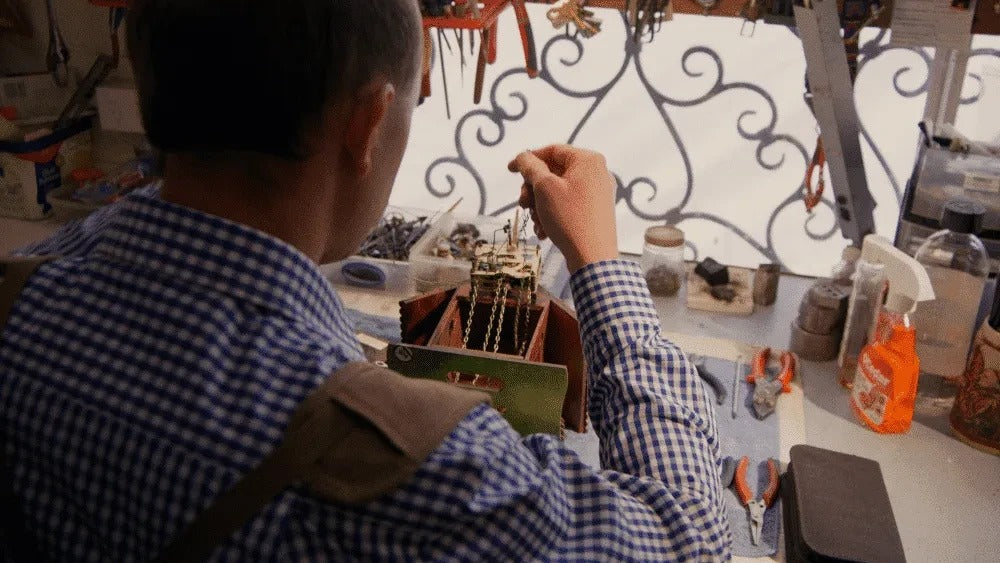
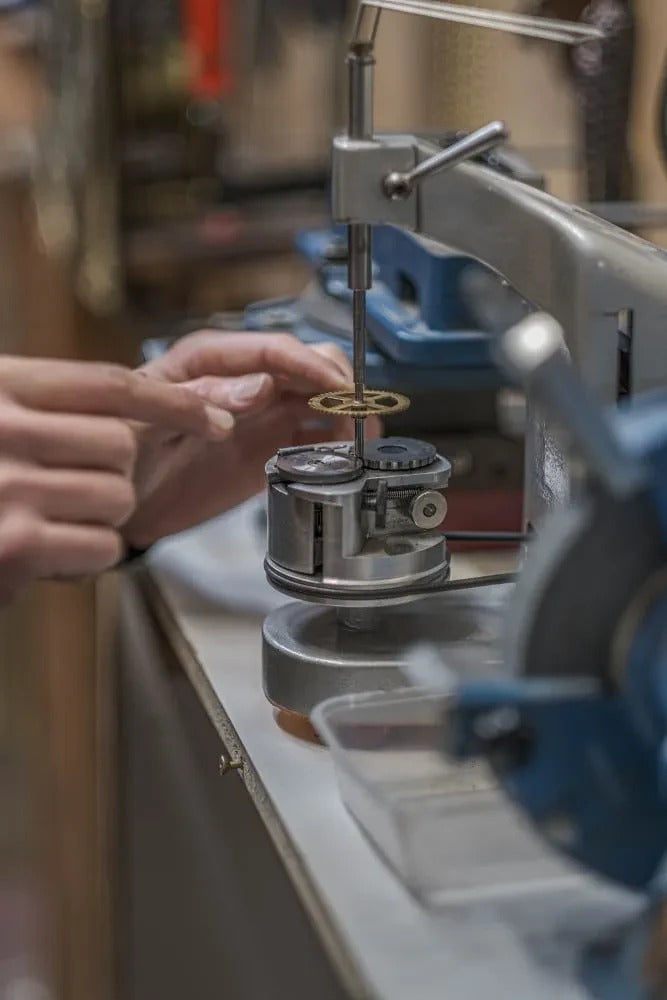
The hands behind every Chronicle clock
Movements assembled, regulated and checked with care by clockmakers who share our passion for fine timekeeping.


The grandfather clock guide
Everything you need to know about grandfather clocks
What they are, how they are built, how they work, where they look best and what to check before you buy.
What is a grandfather clock?
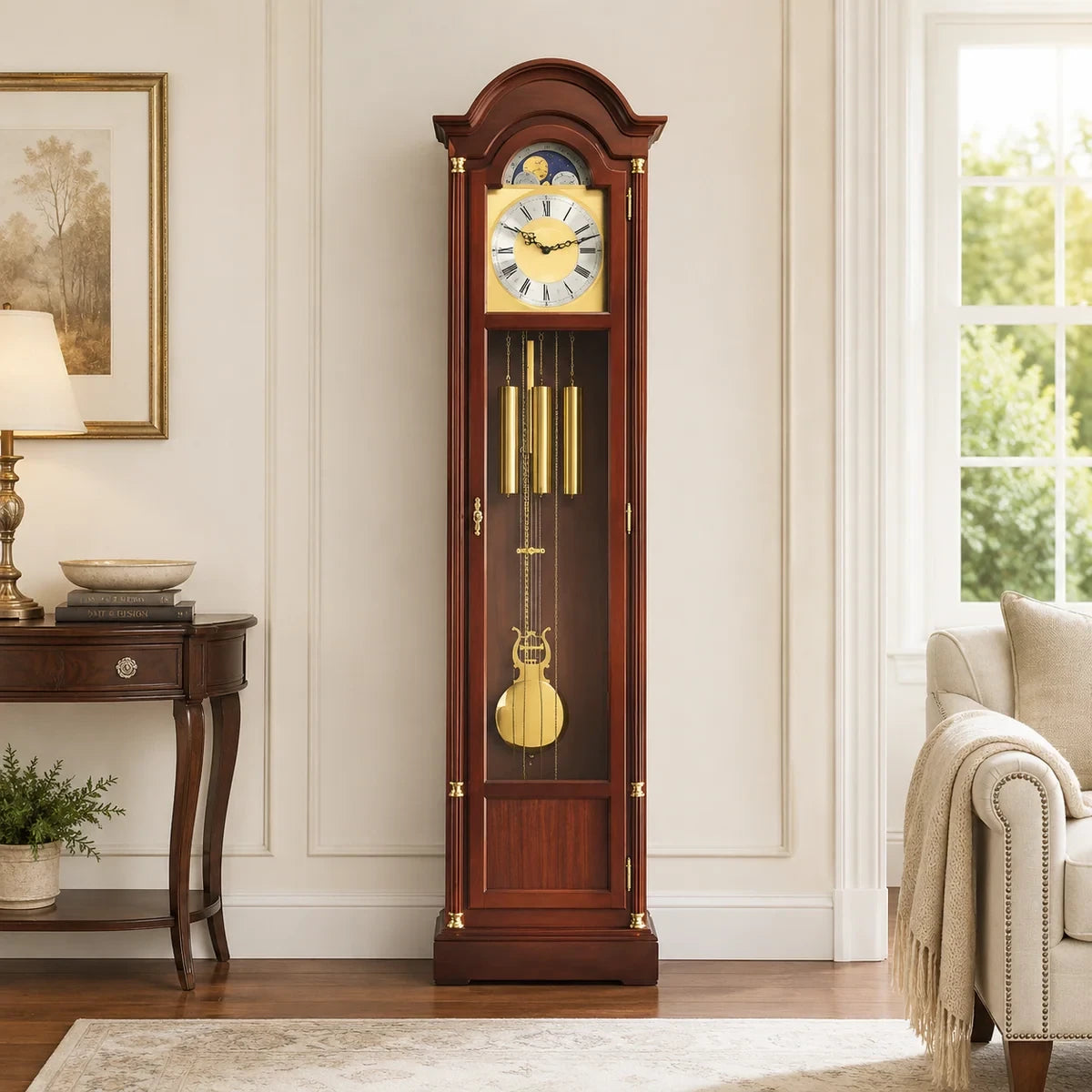
A grandfather clock is a tall, free-standing clock that stands directly on the floor and is placed in the room like a piece of furniture. Unlike a wall clock, it is not fixed to the wall, and unlike a mantel clock, it needs no surface to stand on. A typical feature of a grandfather clock is its tall case which, depending on the model, houses the movement, the pendulum, the weights, the chains or a chiming mechanism.
Many floor clocks have a particularly majestic presence. They do not just tell the time, they also contribute to the harmony of a room. Classic models, with their wooden case, pendulum and chime, are especially associated with tradition, craftsmanship and refined interior design. At the same time, there are also modern floor clocks with clean lines, fitted with quartz or radio-controlled movements.
A grandfather clock is particularly well suited to living rooms, entrance halls, dining rooms or spacious hallways. There, it becomes a centrepiece of the decor, combining function and beauty.
How a grandfather clock is built
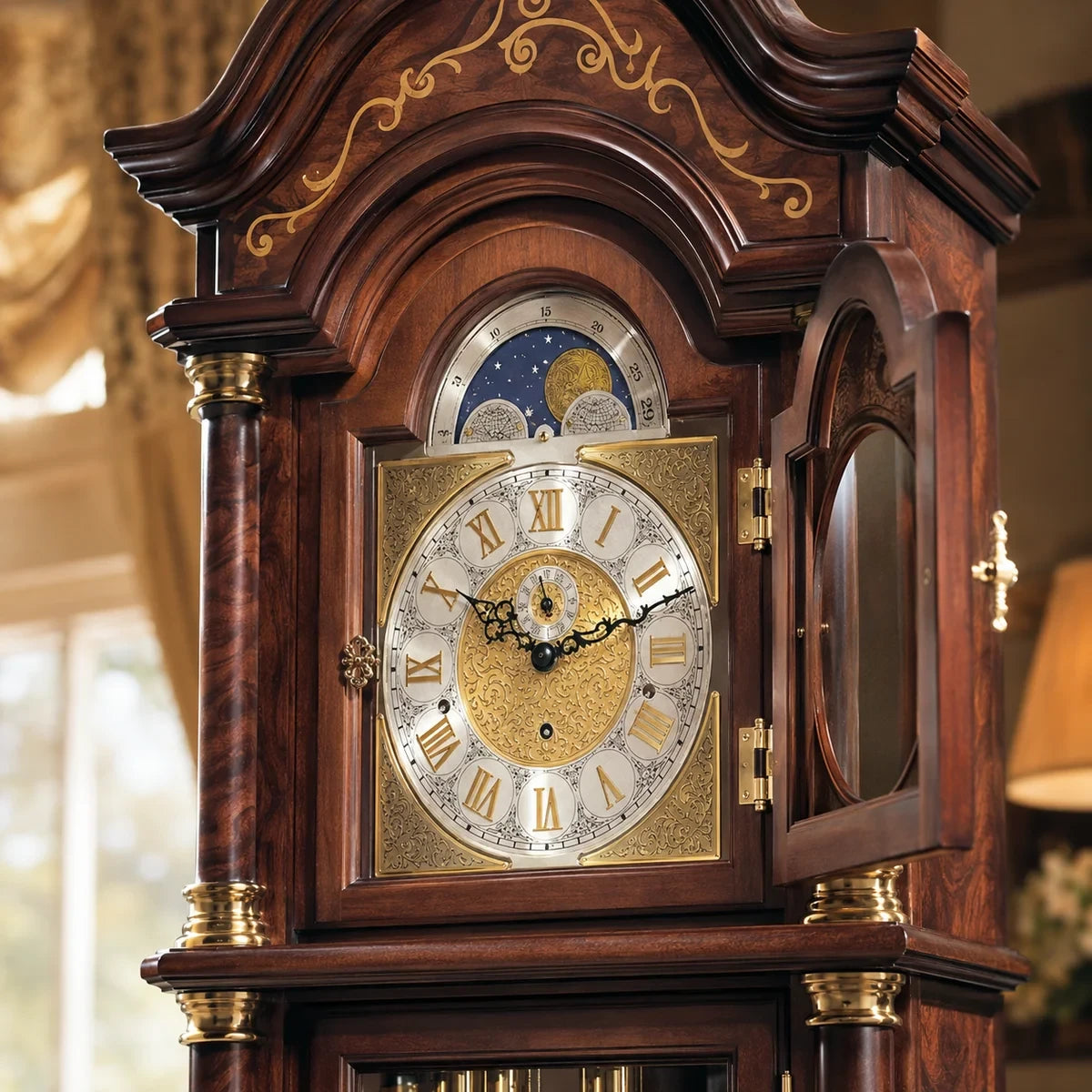
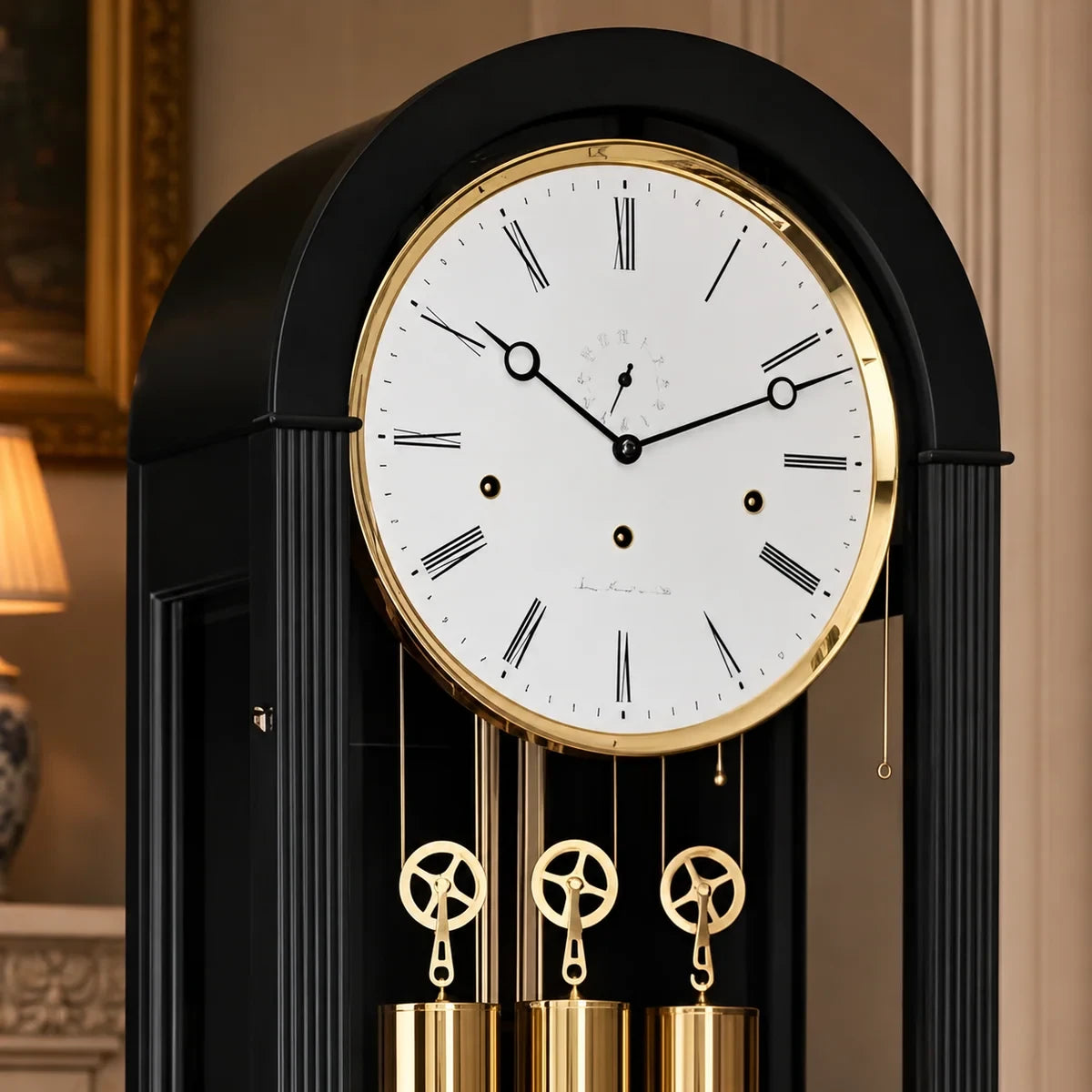
A grandfather clock is made up of several important elements. The most striking is the case. It gives the clock its shape, protects the mechanism and largely defines its look. Depending on the model, the case can be made of solid wood, wood veneer, glass or modern materials. Classic grandfather clocks often have a warm, traditional look, while modern versions feature a more minimalist, streamlined design.
The dial, in the upper part, shows the hours and minutes and can be plain, classic, with Roman numerals or richly ornate. Below the dial, on many models, hangs the pendulum. Often visible through a glass door, it is one of the most characteristic features of traditional floor clocks.
Mechanical floor clocks also use weights, chains or cables. These elements supply the energy the mechanism needs. Many models also have a chime that sounds on the hour, on the half-hour or at regular intervals.
How does a grandfather clock work?
How a grandfather clock works depends on the mechanism inside. There are mainly three types: mechanical grandfather clocks, quartz grandfather clocks and radio-controlled grandfather clocks. Each has its own advantages and suits different needs.
A mechanical grandfather clock runs without batteries. Its mechanism is driven by weights, springs, chains or cables. The stored energy is released into the movement in a controlled way, while the pendulum keeps a steady rhythm. For reliable operation, a mechanical grandfather clock needs to be wound regularly. Many high-quality models have a power reserve of several days, often eight days for example.
A quartz grandfather clock runs on batteries and is particularly easy to look after. It is very accurate and does not need regular winding. Radio-controlled grandfather clocks set themselves automatically, which is very convenient, as the switch to and from daylight saving time also happens automatically.
Where does a grandfather clock look its best?
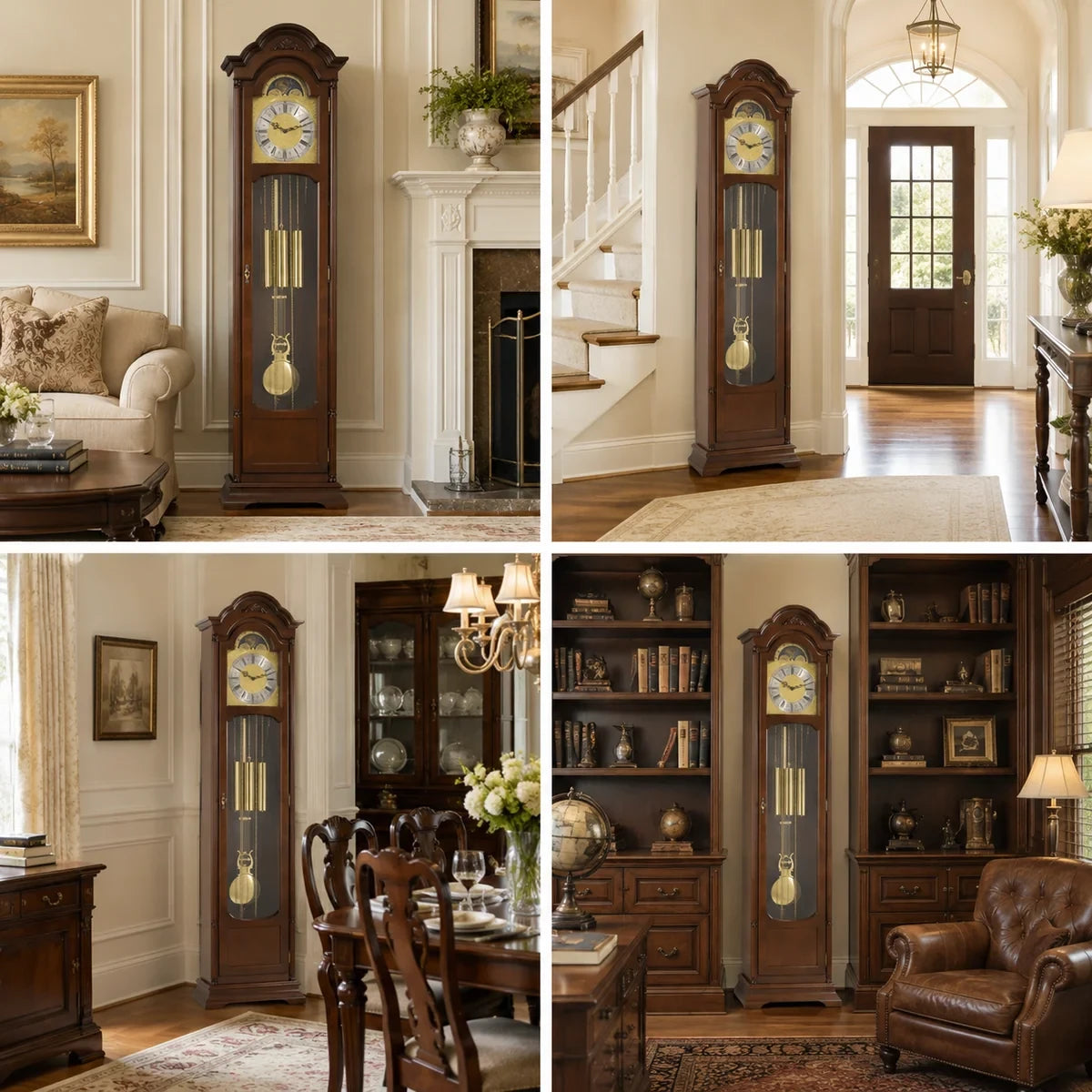
A grandfather clock needs the right spot to reveal its full potential. It is especially at home in living rooms, dining rooms, entrance halls, foyers or spacious hallways. There, it is not only used as a clock but also seen as a fine piece of furniture.
In classically furnished rooms, floor clocks blend particularly well with wooden furniture, warm colours, rugs and traditional decorative pieces. A grandfather clock in dark wood can bring depth, calm and elegance to a room. Lighter, warmer models are perfect for a country-house style, natural materials or bright interiors.
Even in a modern interior, a grandfather clock can look stunning. In that case, choose clean lines, understated colours and a light appearance. It is also important that the clock stands perfectly upright and is not permanently exposed to direct sunlight, high humidity or a direct source of heat. Mechanical grandfather clocks in particular are sensitive to tilting and to large changes in temperature.
What to look for when buying a grandfather clock
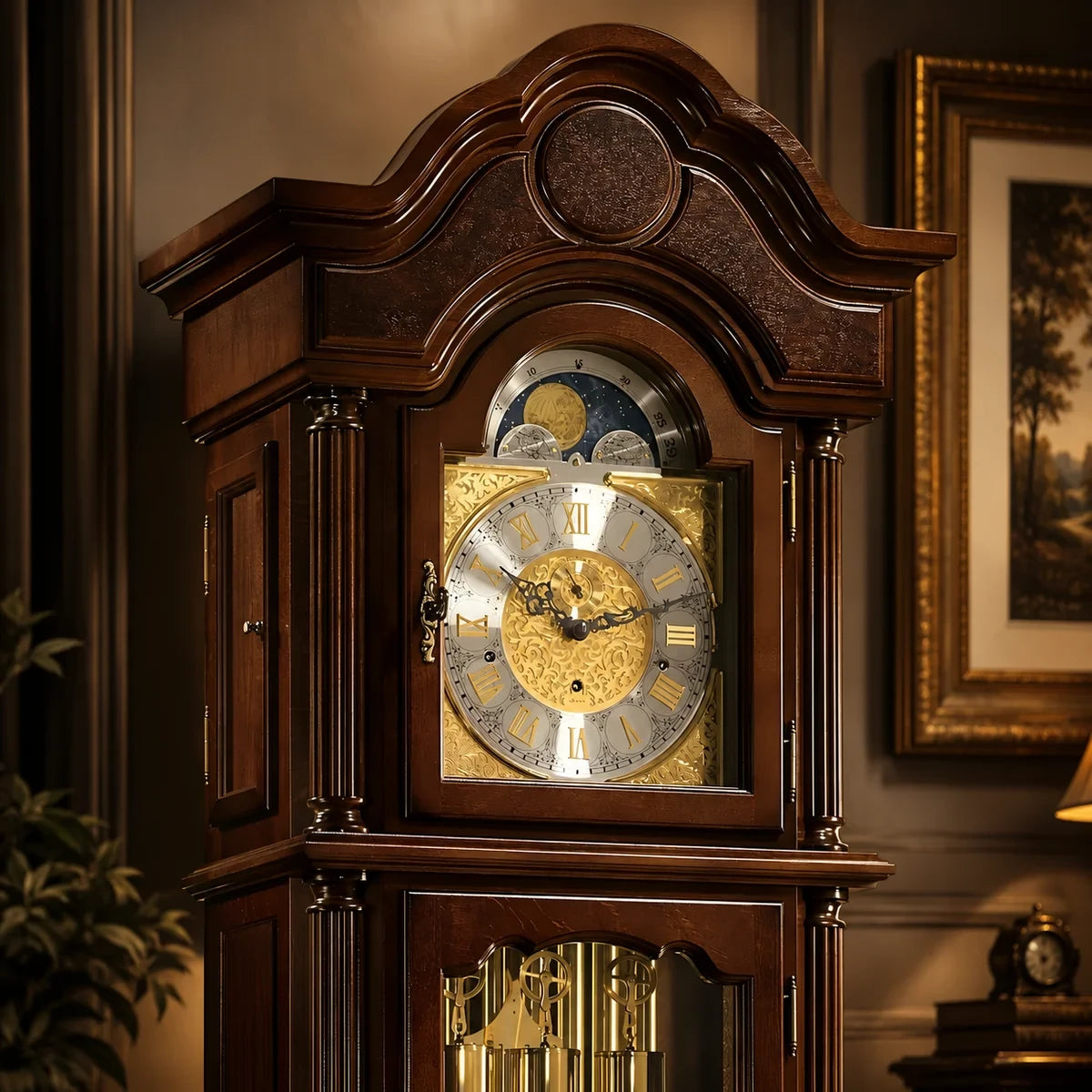
When buying a grandfather clock, the first thing to check is its size. Grandfather clocks are far more imposing than wall clocks or table clocks, so their height, width and depth must suit the room. A clock that is too large can overwhelm a small room, while a grandfather clock that is too small may get lost in a large living room.
Another important point is the mechanism. Mechanical floor clocks offer a traditional experience with their pendulum, their winding and often their chime. Quartz and radio-controlled models are more convenient, easier to maintain and above all very simple to use. If you enjoy the sound, also pay attention to the chiming mechanism. Many models offer hourly chimes, melodies or an automatic night-time silence.
Material, colour and build quality also play an essential role. Wooden cases offer a classic, refined style, while glass or metal elements bring a modern touch. Makers such as Hermle or AMS offer a wide range of models, from traditional to contemporary. A beautiful grandfather clock is therefore not just a timekeeping instrument, but a lasting investment combining function, comfort and value.